
Lifting equipment inspections
Inspection of cranes, hoists and rigging
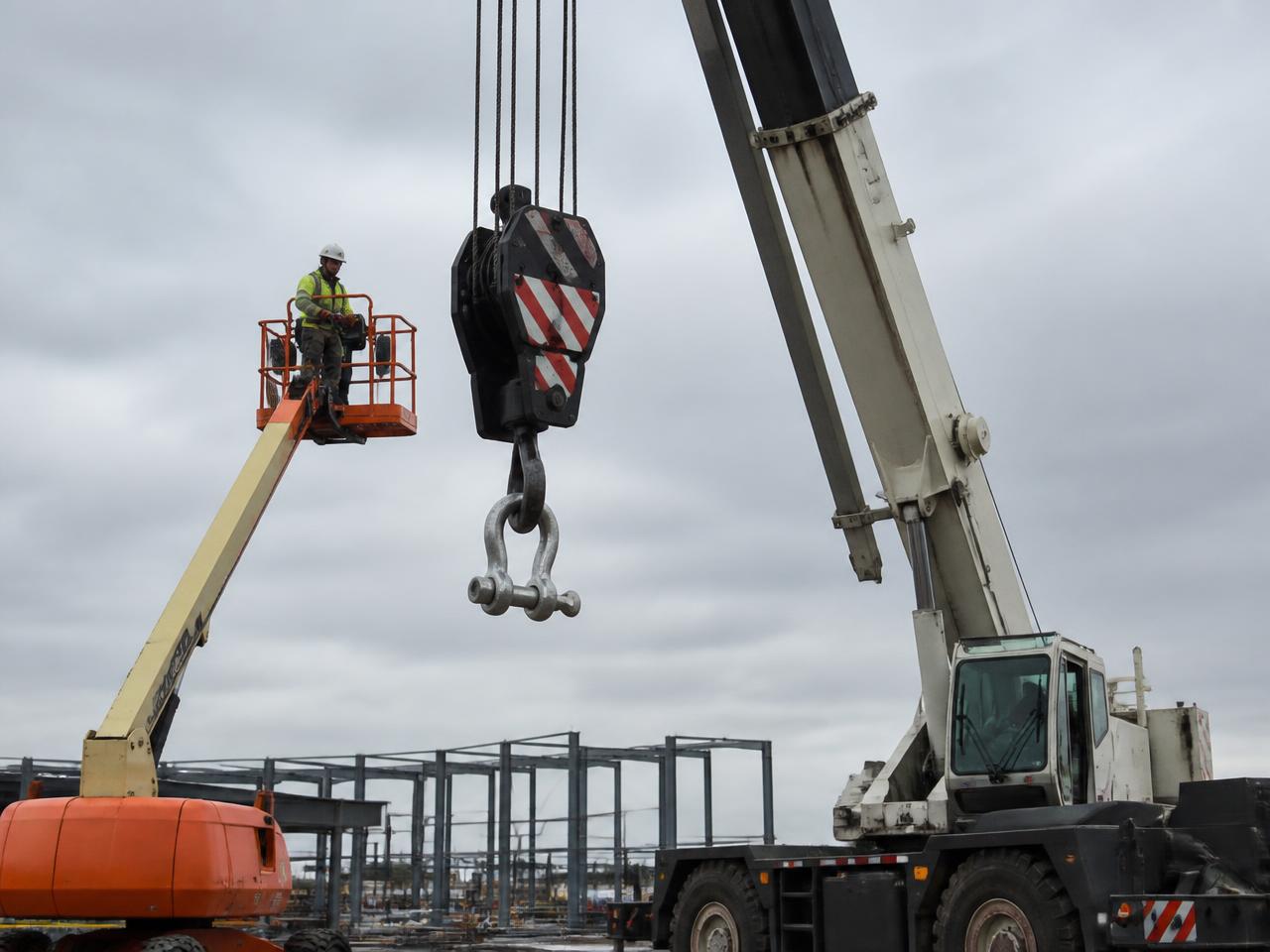
Lifting equipment fails at its details: a worn hook throat, a cracked weld, a sling that has been dragged one time too many. We inspect the components that carry the load and report against the criteria that apply to them.
Equipment
What we inspect
Shop or site, single item or a full register of lifting gear — scope and interval are agreed before we start.
Overhead and gantry cranes
Structure, runways, hoisting components, hooks and load-bearing welds.
Mobile and boom cranes
Boom sections, pins, sheaves, hooks and rope condition on the machine.
Hoists and winches
Chain and wire rope hoists, load brakes, drums and anchorages.
Rigging and accessories
Slings, shackles, hooks, eyebolts, turnbuckles and master links.
Below-the-hook devices
Spreader beams, lifting frames, C-hooks, magnets and custom lifters.
Anchor and fall-arrest points
Fixed anchorages and structural attachments used for load or life safety.
Methods
How the inspection is carried out
We select methods to suit the component, its material and the type of damage it is likely to develop in service.
- Visual inspection to the applicable standard
- Magnetic particle testing of hooks and load-bearing welds
- Liquid penetrant testing on non-ferrous and finished components
- Ultrasonic testing for thickness and subsurface indications
- Dimensional checks for wear, stretch and deformation
- Review of maintenance and previous inspection records
Records
Documentation that stands up to review
Inspection records are only useful if someone else can follow them. Ours identify each item, the method applied, what was found and the assessment against the acceptance criteria.
That makes the report usable by your maintenance planners, your safety team, an insurer or a regulator. We can also work to a recurring schedule so your lifting register stays current rather than being rebuilt each year.
Set up a recurring programme